
Views: 0 Author: Site Editor Publish Time: 2026-01-30 Origin: Site


If you work with window systems, commercial doors, industrial shutters, or building automation, you already know one thing: reliable movement matters. Roller Shutter Motors sit at the center of every automated shutter system, replacing manual lifting with smooth electric control through switches, remotes, timers, or smart platforms.
In this article, you’ll learn what Roller Shutter Motors are, how they work, which types fit different applications, and how to choose the right model for your project. We also cover basic installation, control options, and maintenance considerations. Whether you source motors for retail storefronts or specify systems for large facilities, this guide helps you make practical, informed decisions.
Most Roller Shutter Motors use a tubular design that fits directly inside the roller tube. This compact layout keeps the shutter system clean while protecting internal components from dust and impact. Inside the motor housing, several key parts work together to convert electrical power into smooth mechanical movement. Understanding these internal elements helps buyers evaluate performance, durability, and long-term maintenance needs.
Component | Function |
Drive Motor | Generates rotational force to raise and lower the shutter curtain. |
Reduction Gears | Convert high motor speed into usable torque for heavy lifting. |
Limit Switch Mechanism | Sets upper and lower travel positions to prevent over-rolling or bottom impact. |
Tubular Motor Housing | Protects internal components and allows installation inside the roller shaft. |
Output Shaft Adapter | Transfers torque from the motor to the shutter shaft. |
Mounting Head Interface | Secures the motor to brackets and maintains proper alignment. |
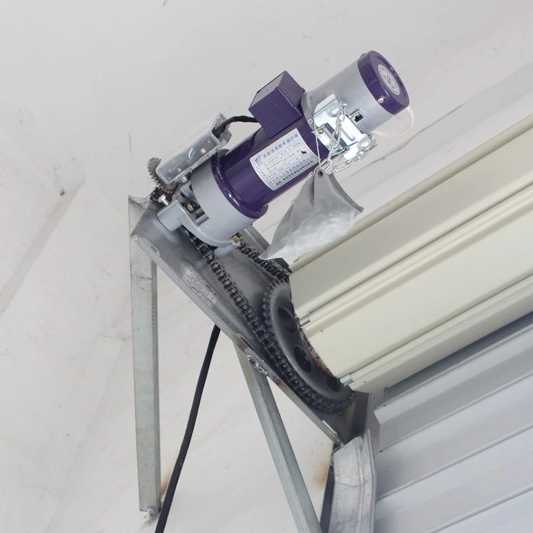
After installation, the motor connects to the shutter shaft using adapters and mounting brackets. Proper alignment is critical, as it directly affects noise levels, load balance, and overall service life. Even a high-quality motor can underperform if the shaft or brackets are misaligned, so careful mechanical setup is just as important as motor selection.
Power enters the motor, spins the internal rotor, then passes through a gear system that converts speed into torque. That torque turns the roller shaft, lifting or lowering the shutter curtain.
Torque is measured in Newton meters (Nm). Choosing the correct Nm rating depends on shutter weight, width, guide rail friction, and tube diameter. Undersized motors struggle; oversized motors increase cost and structural requirements.
AC Roller Shutter Motors connect directly to mains power and suit most standard projects. DC motors operate on low voltage (typically 12V or 24V), making them quieter and easier to integrate with batteries, solar panels, and smart control systems.
Modern Roller Shutter Motors usually include:
● Limit switches to prevent over-travel
● Braking systems to stop curtain drop
● Overload or obstacle protection on advanced models
● Manual override for emergency operation during power outages
These features improve safety and reduce long-term wear.
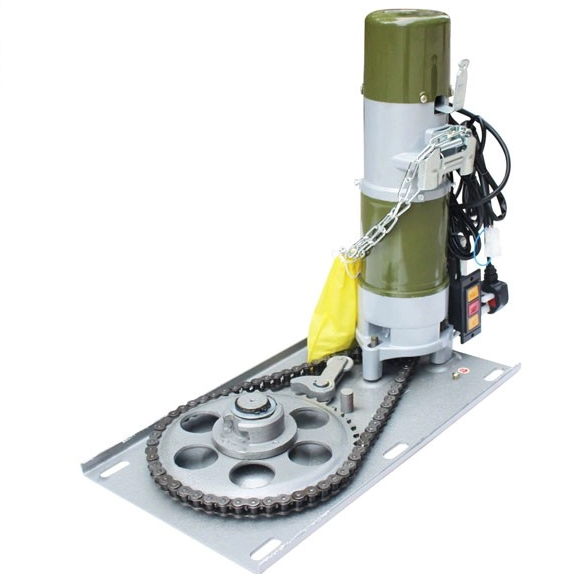
Different projects require different motor designs.
These compact motors suit windows, blinds, awnings, and small storefront shutters. They’re easy to standardize and install, making them popular for housing developments and retail chains.
Often paired with spring compensation systems, these motors balance cost and performance. They work well in shops and commercial buildings with moderate daily cycles.
Mounted outside the roller shaft, these motors handle heavier doors and higher duty cycles. Maintenance access is easier, which matters in industrial environments.
Direct-drive motors reduce mechanical transmission parts. Fewer moving components mean higher reliability, especially in frequent-operation scenarios.
These motors suit locations where mains power is limited or unreliable. They rely on rechargeable batteries or solar input and are common in retrofit or remote installations.
Many manufacturers—including OMKER—offer multiple motor configurations covering everything from window shutters to heavy rolling doors, allowing contractors to apply consistent sourcing strategies across projects.
Motor Type | Typical Applications | Key Buyer Questions |
Tubular | Homes, light retail | Torque range? Limit type? Adapter options? |
Central/Axial | Shops, mid-weight shutters | Spring compatibility? Service access? |
Shaft-end | Industrial doors | Single or three phase? Continuous duty? |
Direct-drive | High-frequency systems | Soft start/stop? Control compatibility? |
Battery/Solar | Retrofit, off-grid | Runtime? Charging method? Low-power logic? |
Tip: Build an internal “scene-to-motor” reference sheet to speed up quoting and reduce selection errors.
Selecting between AC and DC Roller Shutter Motors mainly depends on installation type, power availability, and control needs. AC motors are commonly used in traditional setups, while DC motors are preferred for quieter operation and easier system integration.
Power Type | Key Characteristics | Typical Applications |
AC Roller Shutter Motors | Robust and cost-effective, powered directly by mains electricity, suitable for standard wiring environments | Residential projects, retail storefronts, conventional commercial installations |
DC Roller Shutter Motors | Quieter operation, supports battery and solar power, easier to integrate with automation platforms | Smart buildings, retrofit projects, off-grid locations, automated systems |
Your final choice should always match site power conditions and control requirements, especially when planning smart or low-voltage installations.
For standard Roller Shutter Motor installations, traditional control methods remain widely used. Each option supports different operating habits and site requirements, making them easy to adapt across residential and commercial projects.
● Wall switches – Provide fixed-location control for consistent daily operation.
● Remote controls – Allow flexible access from multiple positions within the space.
● Timers – Enable automated schedules, ideal for routine opening, closing, or shading cycles.
Smart motors connect through Wi-Fi, Zigbee, Z-Wave, or dedicated gateways. They enable grouping, scheduling, and scene control—such as linking shutters to lighting, security, or weather sensors.
Some systems also support position feedback, helping facility managers monitor shutter status remotely.
Start with door dimensions, curtain material, and estimated weight. Add friction and tube diameter to calculate required torque. Always allow a safety margin.
Residential systems run a few cycles daily. Retail doors open and close more often. Industrial shutters may operate continuously. Match motor duty rating to real usage.
Mains power offers stability. Battery and solar options reduce wiring and support remote installations. Evaluate each site’s infrastructure before deciding.
Focus first on:
● Electronic or mechanical limits
● Braking systems
● Overload protection
● Optional obstacle detection
● Radio feedback for advanced projects
Selection Factor | Input Needed | Output |
Door specs | Width, height, weight | Torque rating |
Usage | Daily cycles | Motor class |
Power | Site conditions | AC/DC/Battery |
Control | Manual or smart | Control system |
Safety | Required features | Final configuration |
Tip: Attach this checklist to purchase orders to avoid misunderstandings during delivery.
Installation usually follows four steps:
The motor slides into the tube, adapters lock it in place, and bearings support the shaft. Always test rotation and balance before installing the curtain to ensure smooth movement and proper alignment.
Adjust limits gradually and avoid forcing end positions. Run multiple test cycles under light load first, then confirm consistent stopping points with the full curtain installed.
Verify rotation direction, emergency override response, and any smart connections. For automated systems, also check signal strength, network stability, and control responsiveness before final handover.
Many manual shutters can be upgraded. Confirm shaft size, mounting space, and wiring routes before starting, and inspect existing brackets to ensure they can support the added motor load.
Regular maintenance helps Roller Shutter Motors operate reliably and reduces unexpected downtime. Most common issues are mechanical rather than electrical, so simple routine checks and cleaning can significantly extend system service life.
Maintenance Area | What to Check | Purpose |
Guide rails and mounting points | Inspect rails, fasteners, and brackets for looseness or misalignment | Prevent noise, uneven movement, and mechanical stress |
Cables and wiring | Look for wear, damage, or loose connections | Ensure stable power and control signals |
Tracks and roller areas | Remove dust and debris regularly | Reduce friction and extend motor lifespan |
Operating performance | Watch for slower movement or unusual noise | Identify alignment or limit issues early |
Roller Shutter Motors are used across a wide range of environments, from residential spaces to large-scale automation projects. Each application places different demands on performance, control, and long-term reliability.
● Residential windows, blinds, and awnings – Quiet operation and simple control are key, while bundled motor kits help streamline installation.
● Retail storefronts and commercial premises – Reliable daily opening is essential, with timers and centralized systems supporting routine business operations.
● Industrial doors and heavy rolling shutters – High torque, durable construction, and accessible maintenance are priorities, making shaft-end motors a common choice.
● Smart building projects and automated security systems – Integration takes center stage, connecting motors with access control, lighting, and building management platforms.
Manufacturers like OMKER support these scenarios through in-house R&D, scalable production, and technical assistance, helping integrators deploy consistent systems across multiple sites.
They streamline compliance checks and procurement approvals, especially in international projects, helping buyers reduce documentation time and avoid regulatory delays during project rollout.
Strong R&D supports faster customization and product iteration. Large-scale production ensures stable supply, consistent quality, and shorter lead times for bulk orders.
Look for clear warranty terms, spare parts availability, and remote technical support. These factors often matter more than initial unit price, especially for multi-site installations and long-term maintenance planning.
Roller Shutter Motors power modern shutter automation across homes, shops, and factories. By understanding motor types, power options, selection logic, and installation workflows, teams can build reliable systems that scale with real project needs.
Start from door size and weight, match torque and duty ratings, then choose proper controls. With quality manufacturing and responsive support from Fujian Omker Intelligent Technology Co., Ltd., buyers gain dependable performance, flexible automation, and long-term service value.
A: Roller Shutter Motors are electric drives installed inside or beside the shutter shaft. They automate opening and closing, replacing manual operation with smooth, controlled movement.
A: Roller Shutter Motors convert electrical power into torque that turns the roller shaft. This motion lifts or lowers the shutter curtain using built-in gears and limit switches.
A: Start with shutter size and weight, then match torque and duty rating. Roller Shutter Motors should also fit your power source, control method, and daily usage frequency.
A: Yes. Many Roller Shutter Motors support remotes, timers, or smart platforms like Wi-Fi or Zigbee, allowing automation scenes and grouped control.
A: Pricing depends on motor torque, type, control features, and power option. Industrial or smart-enabled Roller Shutter Motors usually cost more than basic residential models.
A: First inspect guide rails, mounting points, and limit settings. Many issues come from alignment or debris, not from the Roller Shutter Motors themselves.


