
Views: 0 Author: Site Editor Publish Time: 2026-02-03 Origin: Site


Have you ever had a shutter stop working right when business was busiest? A Roller Shutter Motor runs every day under load, heat, dust, and vibration, yet most people only notice it after problems appear. In shops, warehouses, factories, and homes, it controls access, protects property, and keeps daily operations moving. When it starts to fail, the impact goes beyond inconvenience. Openings get delayed. Shutters stick. Emergency repairs cost time and money.
The good news is simple: most motors show early warning signs. In this article, you’ll learn seven clear signals of trouble, what they mean, and how to fix them, plus when professional repair makes sense.
Before diving into each symptom, here’s a quick overview:
Sign | Likely Cause | First Action |
Strange noises | Gear wear, dry bearings, loose mounts | Clean rails, lubricate, inspect |
Slow or jerky movement | Friction, misalignment, motor fatigue | Check rails, test manual movement |
Motor runs, shutter stays still | Broken drive pin or detached tube | Stop use, inspect coupling |
Constant humming | Failed starter capacitor | Power off, check obstruction |
Overheating housing | Excess load or winding strain | Let cool, inspect rails |
Controls unresponsive | Power, receiver, or wiring issue | Check breakers, reset controls |
Shutter drops or won’t stay closed | Brake failure | Secure shutter, call technician |
Grinding, clicking, or harsh buzzing often provide the earliest clue. Grinding usually points to worn gears or dry bearings. Clicking can come from loose mounting points or damaged drive connections. Buzzing often means power reaches the motor, but internal resistance prevents rotation.
Start by cleaning guide rails and applying light silicone lubrication. Then check mounting bolts and confirm the curtain rolls evenly on the tube. If loud mechanical noise continues after these steps, internal parts may already be deteriorating.
When shutters move unevenly or slower than normal, the Roller Shutter Motor works harder to overcome resistance. Dirt in the rails, misaligned guides, or curtain drag often cause this.
Use the manual override if available. If it feels tight, the restriction likely comes from the shutter system, not the motor itself. Cleaning rails and correcting alignment often restores smooth travel. If movement stays inconsistent, continued operation increases heat and electrical stress.
If you hear the motor but the curtain stays still, torque transfer has failed. Detached roller tubes or broken drive pins are common causes.
Stop operation immediately to avoid stripping internal gears. Inspect visible couplings and attempt manual override if trained staff are present. Damaged connectors usually require proper replacement parts rather than temporary fixes.
A steady hum without rotation often signals starter capacitor failure. The motor receives power but cannot generate enough starting force.
Avoid repeated start attempts, since they increase heat buildup. After checking for physical obstructions, try one controlled power reset. Persistent humming usually means the capacitor needs replacement by a technician.
If the motor casing becomes hot after a single cycle, internal windings are under strain. Rail friction, poor ventilation, or undersized motors can all cause overheating.
Allow the unit to cool before further use. Inspect rails and curtain alignment to reduce mechanical load. Repeated overheating requires professional diagnosis to prevent permanent winding damage.
When controls stop responding, power interruptions, receiver faults, or wiring degradation are common contributors. Start by checking breakers, isolation switches, and remote batteries. Reprogram controls if supported by your system.
If breakers trip repeatedly or power drops continue, electrical faults are likely present and qualified service becomes necessary.
Unexpected shutter movement often indicates internal brake failure and creates immediate safety risk. Secure the curtain in a stable position and restrict access until repairs are complete. Continued operation can damage the shutter assembly and endanger people nearby.
Before calling a technician, there are a few basic on-site actions worth trying. These simple checks help reduce mechanical strain and often restore normal operation, especially when issues are still at an early stage:
● Lubricate rails using silicone-based products to improve sliding smoothness and reduce resistance during opening and closing
● Clear debris from guide rails, including dust, sand, or hardened buildup that can quietly increase motor load
● Reset controls once if communication feels unstable, then test the shutter through a full open-and-close cycle
● Tighten loose brackets and visible mounting points to limit vibration and prevent uneven curtain movement
Handled early, these steps create a practical first-response routine and help stop minor issues from developing into major failures.
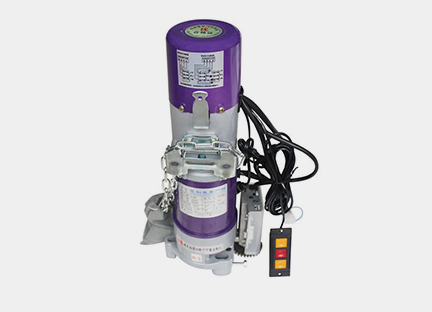
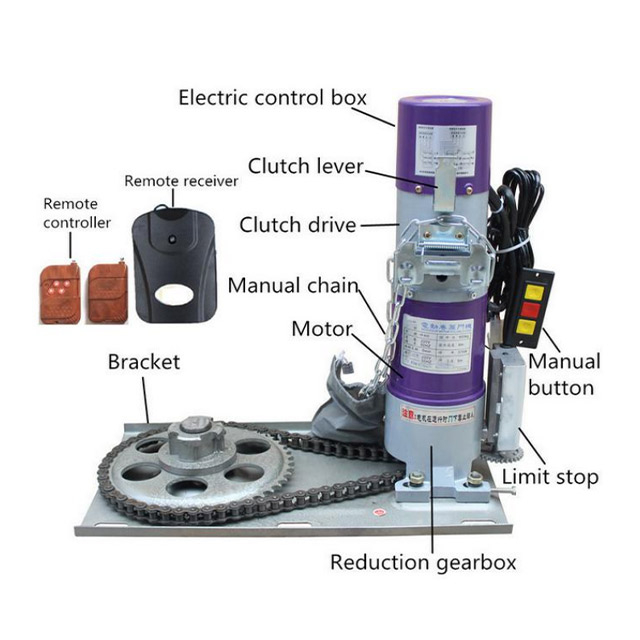
Inside every Roller Shutter Motor, a few core components handle most of the workload. When performance drops, service issues usually trace back to one of the following parts:
Component | Primary Function | Typical Role in Operation |
Gears | Convert rotational speed into lifting force | Drive the curtain up and down |
Capacitors | Assist motor startup | Help initiate smooth motor rotation |
Internal Brakes | Hold curtain position | Prevent unwanted shutter movement |
Most repair cases involve one of these three components, which is why they are often the first areas technicians inspect during diagnosis.
Frequent cycling, heavy curtains, and rail friction increase heat and electrical stress. Over time, torque output drops and internal wear accelerates. This is why shutters in high-traffic commercial settings often require earlier servicing than residential systems.
Monthly inspections of rails, guides, and curtain alignment help catch early wear, loose components, or uneven movement before they affect performance. Regular visual checks also reduce mechanical strain and improve overall system reliability during daily operation.
Light lubrication every few months helps maintain smooth movement, minimizes friction buildup, and lowers motor load over time. Using silicone-based products keeps rails clean while supporting consistent shutter travel.
Annual professional servicing focuses on key electrical and mechanical checkpoints that are difficult to assess during routine on-site inspections:
Inspection Area | What Technicians Check | Why It Matters |
Wiring integrity | Cable condition and connections | Prevents electrical instability |
Capacitor health | Startup performance components | Supports smooth motor activation |
Limit settings | Open and close positions | Ensures accurate shutter travel |
Mechanical alignment | Motor and curtain positioning | Reduces strain and uneven wear |
These targeted checks help uncover hidden issues early and support longer overall system life.
Persistent grinding, repeated overheating, electrical trips, or sudden shutter drops should always trigger professional inspection, especially in high-usage commercial environments where safety, access control, and operational uptime matter most.
They usually start by checking rails, alignment, wiring continuity, capacitors, and drive connections. This structured approach often identifies faults quickly and helps avoid unnecessary part replacement.
Early intervention avoids gear stripping and winding damage, which significantly lowers total ownership cost, supports maintenance planning, minimizes disruption to daily operations, and reduces unexpected downtime.
Situation Observed | Typical Technician Focus | Main Benefit |
Grinding, overheating, drops | Rails, wiring, capacitors | Faster fault identification |
Electrical trips | Alignment and drive connections | Reduced part replacement |
Early-stage mechanical issues | Full system inspection | Lower downtime and repair cost |
OMKER’s R&D-driven production model, CE-certified assemblies, and structured after-sales support help improve repair success. Access to compatible replacement parts and technical guidance simplifies maintenance planning, especially for multi-site operations and long-term service contracts.
Rail cleaning and alignment solve many early-stage issues and often restore smooth movement in a short time. Electrical faults or repeated humming usually require component replacement, especially when startup performance becomes inconsistent or motor load increases.
If failures repeat on aging systems, upgrading may improve performance consistency and reduce future maintenance burden. Newer motor platforms also support better efficiency, steadier control response, and fewer unexpected service interruptions.
Situation | Recommended Approach |
Early-stage rail or alignment issues | Minor adjustments |
Electrical faults or repeated humming | Component replacement |
Repeated failures on older systems | System upgrade |
Lower friction reduces current draw, supports longer motor life, and helps shutters move more evenly during frequent opening and closing. Smooth travel also decreases strain on internal components over time, improving overall system stability.
Stable alignment minimizes vibration and mechanical wear, creating quieter operation in busy environments. This improves workplace comfort, supports nearby equipment performance, and helps prevent small mechanical issues from developing into larger faults.
Healthy electrical connections improve control consistency, reduce signal delays, and limit unexpected interruptions during daily use, especially in commercial settings where fast access and coordinated operation matter.
A Roller Shutter Motor rarely fails without warning. Changes in noise, movement, heat, or response often appear first. Acting early through cleaning, lubrication, alignment, and timely repair helps prevent costly breakdowns. Routine on-site care, combined with scheduled servicing, extends system life and improves daily reliability. Choosing quality motors from Fujian Omker Intelligent Technology Co., Ltd. adds extra value through stable performance, strong internal design, and dependable support. With proactive maintenance, roller shutters stay smooth, quiet, and dependable, helping businesses protect property, keep access secure, and maintain uninterrupted workflows.
A: Common signs include unusual noise, slow or jerky movement, overheating, humming, or a shutter that won’t respond. If your Roller Shutter Motor shows any of these, early inspection helps prevent larger failures.
A: Most Roller Shutter Motor issues come from rail friction, worn gears, failed capacitors, or heavy daily use. Dust buildup and poor alignment also increase internal stress over time.
A: You can start by cleaning guide rails, applying silicone lubrication, and resetting controls. If your Roller Shutter Motor still hums, overheats, or drops the shutter, professional repair is the safer option.
A: This often means a broken drive pin or detached roller tube. Stop using the Roller Shutter Motor and have the coupling checked to avoid internal gear damage.
A: Repair works for early-stage faults. If problems repeat, upgrading to a newer Roller Shutter Motor may improve efficiency and reduce long-term maintenance costs.
A: Routine care keeps movement smooth, reduces noise, extends motor life, and lowers downtime risk, especially in busy commercial environments.


