
Views: 0 Author: Site Editor Publish Time: 2026-01-13 Origin: Site


In the modern world of access control, barrier gates are indispensable for regulating vehicle entry and ensuring security in high-traffic areas. These gates are typically used in parking systems, toll booths, residential complexes, and other controlled access points. Understanding how barrier gates function and their role in access control systems is crucial for businesses and facility managers looking to streamline their operations and enhance security. This article will provide a comprehensive guide on what barrier gates are, their key components, how they operate, where they are used, and the many benefits they offer. Whether you’re considering installing a barrier gate for a parking lot or a more complex system for a secure facility, this guide will give you a clear understanding of how these systems work and how they can benefit your site.
A barrier gate is a type of gate system that helps control the flow of vehicles into and out of restricted or monitored areas. It consists of a boom arm that rises and lowers to allow authorized vehicles to pass through while preventing unauthorized access. These gates are often seen in environments like parking lots, toll booths, and residential complexes where it is essential to regulate vehicle access. The primary role of a barrier gate is to provide a controlled entry point while ensuring safety, security, and smooth traffic management.
Not only do barrier gates help in restricting unauthorized access, but they also work seamlessly with other access control systems such as RFID, license plate recognition (LPR), or remote systems. By doing so, they automate the entry process, improving efficiency and security. Whether used in high-traffic commercial spaces or low-traffic residential settings, barrier gates provide the necessary infrastructure for secure and efficient vehicle management.
To fully understand how a barrier gate operates, it’s important to look at the key components that make up the system. Each part of the barrier gate works together to provide secure, reliable, and efficient vehicle control.
Motor and Control Board:
The motor is the driving force behind the barrier gate system, responsible for raising and lowering the boom arm. It is typically powered by an electric supply and controlled by a control board. The control board sends signals to the motor, dictating when the gate should open or close. Modern barrier gates often come with programmable control boards, allowing for customization of operational features like the gate's speed, movement limits, and timings.
Boom Arm:
The boom arm is the most visible part of the barrier gate. It is a long horizontal bar that extends across the entryway to block or allow vehicles to pass. The boom arm is typically made from lightweight yet durable materials like aluminum or steel, designed to withstand external elements while maintaining high performance. Depending on the design, the boom arm can be straight, articulated, or folding.
Sensor and Access Control Interfaces:
Sensors are critical in a barrier gate system as they detect the presence of vehicles. These can include inductive loop detectors, infrared sensors, or photoelectric sensors. Additionally, modern barrier gates interface with access control systems, such as RFID readers, license plate recognition cameras, or remote control devices, to authenticate and authorize vehicles for entry. This automation reduces the need for manual intervention and enhances both security and efficiency.
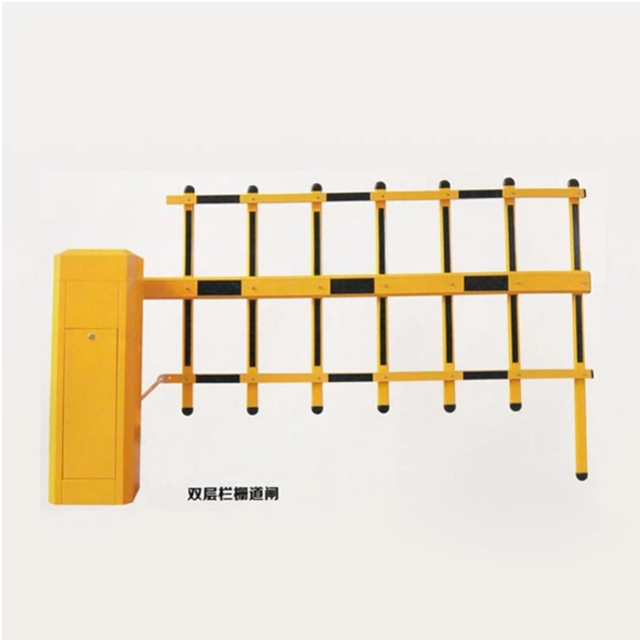
Barrier gates operate through a series of automated signals and mechanisms, designed to ensure smooth functionality and enhance security.
Automatic Signals (Sensor, Remote, RFID):
The operation of barrier gates is triggered by sensors that detect the presence of vehicles. Once a vehicle approaches, the sensor sends a signal to the control system to raise the boom arm, allowing the vehicle to pass. This process can be triggered in various ways:
Sensor-based operation: The gate opens automatically when the sensor detects a vehicle.
Remote operation: A remote control system can be used to open the gate from a distance.
RFID or License Plate Recognition (LPR): With RFID or LPR systems, vehicles are granted access automatically if their credentials match the system’s database.
Safety Mechanisms (Auto-Reverse, Loop Detectors):
Safety is a primary concern in any access control system, and barrier gates are equipped with mechanisms that enhance safety. For instance, auto-reverse functionality ensures that if the boom arm detects an obstruction (e.g., a vehicle or pedestrian), it will automatically reverse to prevent damage or injury. Additionally, loop detectors embedded in the road detect the presence of vehicles and prevent the gate from closing when a vehicle is still passing through.
These mechanisms help reduce the risk of accidents and ensure that the barrier gate system operates smoothly without interference from outside factors.
Barrier gates are used in a wide range of environments, each with its own unique access control needs. Some common applications include:
Airports:
Barrier gates are frequently used at airports to control access to secure areas such as terminals, parking lots, and restricted zones. They help ensure that only authorized vehicles can enter certain parts of the airport, improving overall security.
Residential Communities:
For residential complexes, gated communities, and private properties, barrier gates provide a simple and effective way to manage access. They are often used in conjunction with intercom systems, access cards, or RFID tags to allow residents and authorized visitors entry while blocking unauthorized vehicles.
Industrial Parks and Commercial Complexes:
In industrial and commercial environments, barrier gates are used to control vehicle entry to facilities, loading docks, and other restricted areas. They help manage the flow of goods and ensure that only authorized vehicles are allowed access to the premises.
The versatility of barrier gates makes them suitable for various applications, ensuring efficient and secure vehicle management in a wide range of environments.
Automatic barrier gates provide several advantages over traditional manual systems, making them a preferred choice in many applications. Here are some key benefits:
Security:
The primary benefit of using a barrier gate is enhanced security. Automated systems like RFID, license plate recognition, or remote access ensure that only authorized vehicles can pass, reducing the risk of unauthorized access or theft. The added security features such as auto-reverse and loop detectors also prevent accidents and enhance safety.
Traffic Control:
Barrier gates help manage traffic flow efficiently by providing a controlled entry point for vehicles. This is particularly useful in high-traffic areas, such as parking lots, toll booths, and commercial facilities, where quick and easy vehicle access is essential.
Ease of Integration:
Barrier gates can be easily integrated with other access control systems, such as RFID systems, license plate recognition, or gate intercoms. This integration allows for seamless operation and further streamlines access control, reducing the need for manual entry.
In addition to these benefits, barrier gates can also help reduce labor costs, increase operational efficiency, and ensure a smooth flow of traffic at entry points.
Barrier gates are a crucial component of modern access control systems, offering a combination of security, traffic management, and ease of integration. Whether you need a solution for a high-traffic airport or a secure residential community, barrier gates provide a reliable way to manage vehicle access. Omker’s advanced barrier gates are designed with precision technology and high-quality components to ensure optimal performance and durability. To find out more about how our barrier gates can enhance the security and efficiency of your access control system, contact us today for more information.
What is the function of a barrier gate?
A barrier gate controls the movement of vehicles by raising and lowering a boom arm, allowing authorized vehicles to pass while restricting others.
How do barrier gates operate automatically?
Barrier gates operate using sensors, RFID tags, or remote controls to automatically trigger the opening or closing of the gate based on the vehicle’s authorization.
Where are barrier gates commonly used?
Barrier gates are used in airports, residential communities, industrial complexes, toll booths, and anywhere vehicle access needs to be controlled.
What are the main benefits of using automatic barrier gates?
Automatic barrier gates offer benefits such as enhanced security, efficient traffic management, and easy integration with other access control systems.


