
Views: 0 Author: Site Editor Publish Time: 2025-12-30 Origin: Site


In the world of modern access control, barrier gates are integral to maintaining secure, efficient traffic management. These gates are primarily used in environments such as parking lots, toll booths, and controlled access points where vehicle management is essential. However, choosing the right barrier gate system can often be challenging due to the variety of options available, each tailored to different needs and environments. Understanding the differences between these types of gates and their unique features will help you select the most appropriate option for your site. From high-traffic urban areas to specialized environments like industrial zones and residential complexes, selecting the proper barrier gate can significantly improve both security and operational efficiency. In this article, we’ll explore the main types of barrier gates, their uses, and the benefits of each system to guide you in making an informed decision for your next access control project.
Barrier gates play a crucial role in controlling vehicle access in a variety of settings, from busy commercial areas to secure residential communities. The functionality and longevity of these systems depend on understanding which type is best suited for your environment. When choosing a barrier gate system, it's important to evaluate factors such as traffic volume, environmental conditions, and integration with other access control systems. The right barrier gate will not only enhance security but also streamline traffic flow, reduce maintenance costs, and improve the overall user experience.
For instance, an automatic barrier gate system will be ideal for areas with high traffic, as it operates efficiently and can quickly open and close, reducing wait times. On the other hand, a manual system may be more suitable for areas with lower traffic and limited space. Moreover, specialized gates, such as solar-powered or articulated arm barrier gates, offer unique advantages in specific conditions like remote locations or low-ceiling areas.
This article delves into the different types of barrier gates, breaking down their features, benefits, and ideal use cases, helping you understand how to make the best choice for your site’s needs.
Automatic barrier gates are among the most commonly used systems in modern access control. They offer seamless operation, making them an ideal choice for high-traffic environments where speed and efficiency are paramount.
What They Are and How They Operate:
Automatic barrier gates utilize electric motors and automated systems to raise and lower the boom arm, allowing vehicles to pass through. These gates are typically triggered by sensors, remote controls, RFID tags, or license plate recognition systems. The automation ensures smooth, continuous operation without the need for manual intervention, making them ideal for areas with frequent vehicle movement.
Typical Application Scenarios:
These gates are commonly found in parking lots, toll booths, and entry points of commercial, industrial, and residential areas. They are highly effective in managing high volumes of vehicles and ensuring secure access to restricted zones. For example, parking lots with multiple entry lanes or toll booths on highways rely heavily on automatic gates to minimize delays and improve traffic flow.
Key Benefits:
Automatic barrier gates provide numerous advantages, including fast operation, increased security, and improved user experience. They are particularly effective in high-traffic environments, where quick and efficient vehicle entry is critical. Moreover, automatic gates can be integrated with various access control systems, such as RFID readers or license plate recognition, enabling seamless and secure entry for authorized vehicles. Their hands-free operation reduces the risk of human error, enhances security, and increases overall efficiency.
Automatic systems also reduce the need for constant maintenance as they are designed for durability, with many featuring weather-resistant components and long-lasting motors that ensure reliable operation under various conditions.
When selecting a barrier gate, understanding the differences between straight and articulated boom gates is essential for choosing the right solution for your site’s unique needs.
Straight Arm Barrier Gate Overview:
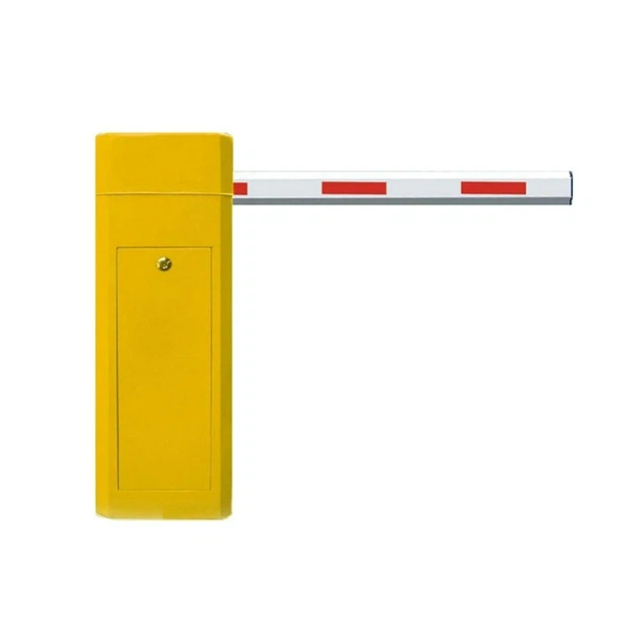
A straight arm barrier gate is the most traditional type, featuring a single rigid arm that extends horizontally across the entry point. It is raised and lowered vertically using an electric motor. This type of gate is suitable for wide-open spaces where there are no overhead restrictions or limitations. It is commonly used in parking lots, toll booths, and areas with high vehicle throughput.
Articulated Arm Barrier Gate for Overhead Restrictions:
The articulated arm barrier gate, on the other hand, features a segmented boom that folds and extends to provide better maneuverability in spaces with overhead obstacles. This type is ideal for areas where there is limited vertical clearance, such as under bridges, low-ceiling areas, or gates with restricted overhead space. The articulated design allows the arm to be raised and lowered without requiring excessive clearance above the gate.
Comparison:
The straight arm barrier gate is simpler in design and typically offers faster operation. It is best suited for locations with ample clearance and wide lanes. In contrast, the articulated barrier gate is more flexible and can be used in areas where traditional straight gates would be impractical due to height limitations. A comparison table is provided below to help illustrate the key differences.
Feature | Straight Arm Barrier Gate | Articulated Boom Barrier Gate |
Application | Open areas with no height limit | Areas with height restrictions |
Boom Movement | Vertical lift | Folding and lifting design |
Space Requirements | Requires clear height | Can be installed in lower spaces |
Traffic Speed | Faster operation | Slightly slower, more adaptable |
While straight and articulated barrier gates are commonly used, several specialized barrier gate variants are available for unique applications or challenging environments.
Folding Arm Barrier Gates:
Folding arm barrier gates are designed for areas where space is limited. These gates feature a compact boom that folds up and down, rather than extending horizontally. The folding mechanism allows them to be used in tight spaces where traditional barrier gates would not fit. They are often used in driveways, narrow lanes, and locations with limited clearance, where space efficiency is a key consideration.
Solar-Powered Barrier Gates:
For environmentally conscious and cost-effective solutions, solar-powered barrier gates offer a sustainable alternative to traditional electric systems. These gates are equipped with solar panels that generate the power needed to operate the gate. Solar-powered systems are ideal for remote locations where access to a reliable power grid is limited. They are also an excellent choice for reducing energy costs and minimizing the carbon footprint of access control systems.
Manual Barrier Gates:
While most barrier gates are automated, manual systems are still used in certain applications where automation is unnecessary or impractical. Manual barrier gates require human intervention to raise and lower the boom, making them a more affordable option for low-traffic areas or temporary installations. They are commonly used in small parking lots, temporary events, or areas with limited vehicle entry.
One of the most significant advancements in barrier gate technology is the ability to integrate with other parking and security systems, enhancing the overall functionality of the system.
RFID and License Plate Recognition:
Barrier gates can be integrated with RFID technology or license plate recognition systems, which enables automatic identification of authorized vehicles. This technology is particularly useful in parking lots, toll stations, and restricted areas where fast and secure vehicle identification is required. By linking the barrier gate with these systems, the process becomes fully automated, reducing wait times and enhancing security.
Token/Ticket Systems:
Another form of integration is with token or ticket systems, commonly used in parking garages or toll booths. These systems work by issuing tickets or tokens to vehicles, which are then scanned by the barrier gate at the point of exit. The gate will automatically open once the correct token or ticket is presented, facilitating smooth and efficient access control.
Why Integration Boosts ROI and Automation:
Integration with parking and security systems reduces human labor, increases security, and helps optimize traffic flow. Moreover, it allows for data collection and analytics, which can be valuable for operational decision-making and improving customer experiences. Automation also reduces the potential for human error, making the overall access control system more reliable and efficient.
Selecting the right barrier gate system is crucial for enhancing security, improving traffic flow, and ensuring the smooth operation of your site. By understanding the different types of barrier gates and their specific features, you can choose the ideal solution for your needs. Whether you opt for an automatic, articulated, or solar-powered gate, it’s essential to consider the unique requirements of your site, such as traffic volume, space constraints, and environmental conditions. Omker provides a variety of barrier gates designed for different applications, and our expert team is ready to help you find the perfect solution for your site. Contact us today to discuss your requirements and receive a customized barrier gate system that meets your needs.
What is the difference between automatic and manual barrier gates?
Automatic barrier gates operate without human intervention, making them ideal for high-traffic environments. Manual gates require human operation and are best suited for low-traffic areas or temporary use.
Can I integrate a barrier gate with my existing access control system?
Yes, Omker’s barrier gates are compatible with RFID, license plate recognition, and other access control systems, offering seamless integration for enhanced security and automation.
How do solar-powered barrier gates work?
Solar-powered barrier gates generate electricity from solar panels, reducing operational costs and making them an excellent choice for remote areas with limited access to electricity.
How do articulated barrier gates differ from straight arm gates?
Articulated barrier gates have a folding arm design that allows for operation in areas with height restrictions, while straight arm gates are better suited for wide, open spaces.


